DETECTOR – Dating rEcent climaTE Changes To fOrecast the futuRe
Horizon 2024 Marie Sklodowska-Curie Staff Exchanges Action

“Funded by the European Union. Views and opinions expressed are however those of the author(s) only and do not necessarily reflect those of the European Union or [name of the granting authority]. Neither the European Union nor the granting authority can be held responsible for them.”
DETECTOR Dating rEcent climaTE Changes To fOrecast the futuRe
The project DETECTOR –Dating rEcent climaTE Changes To fOrecast the futuRe– is part of a Horizon 2024 Marie Sklodowska-Curie Staff Exchanges Action that supports the short-term mobility of research and innovation staff at diferent levels, including universities, research institutions and non-academic institutions within and beyond Europe.
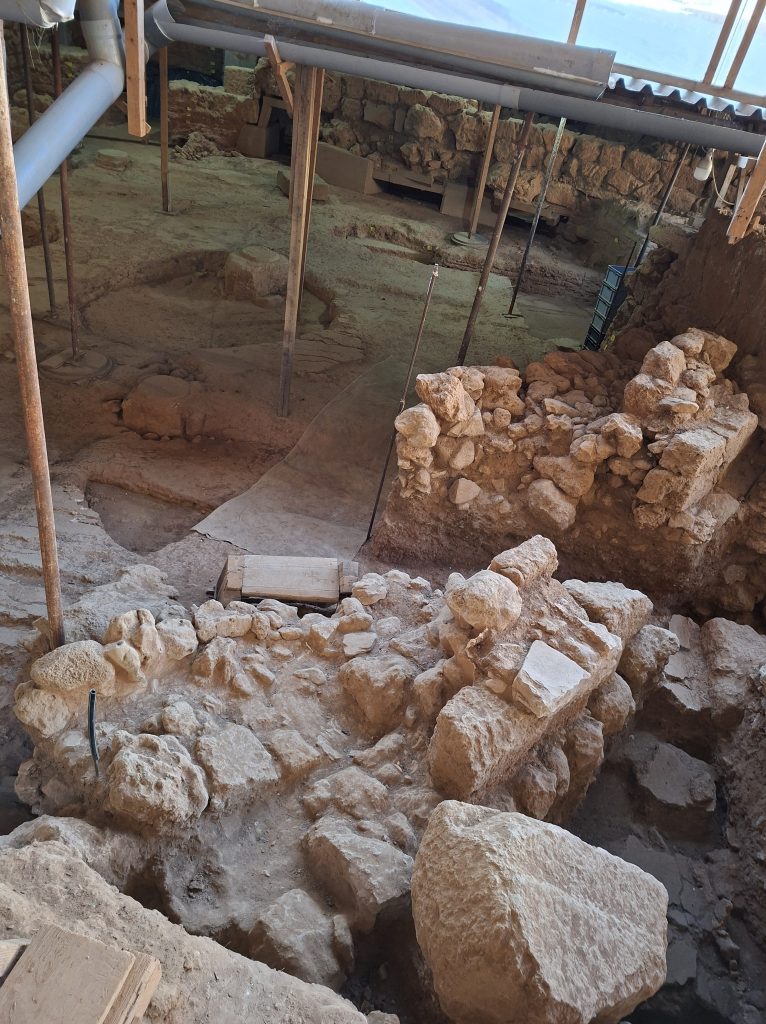
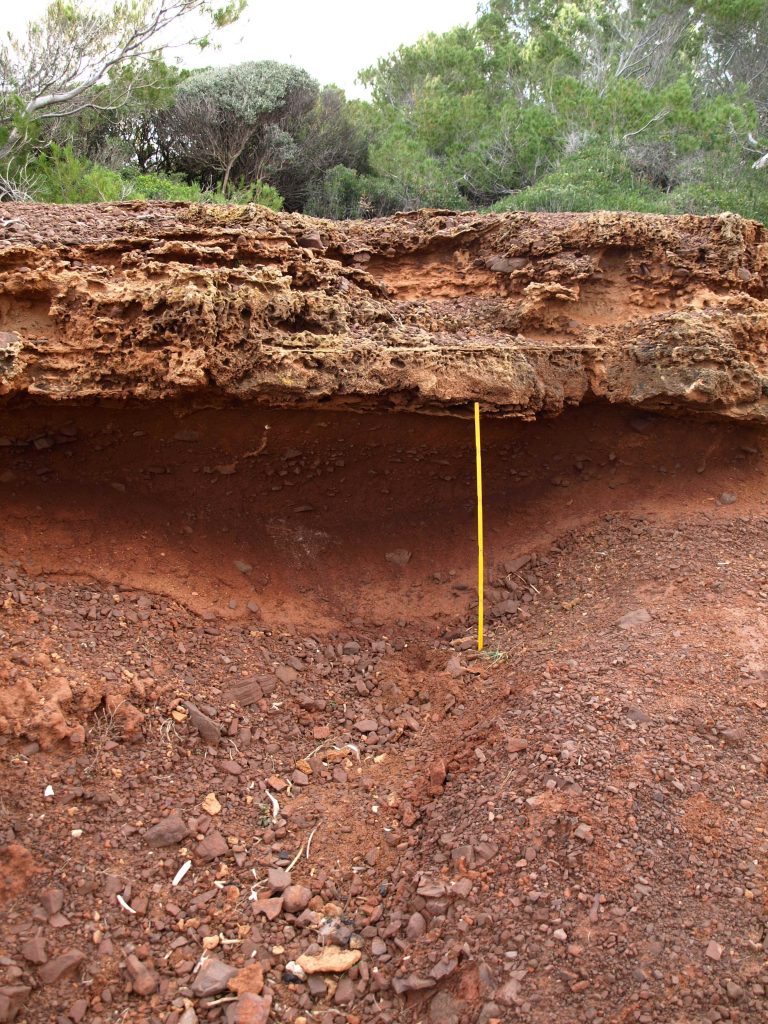
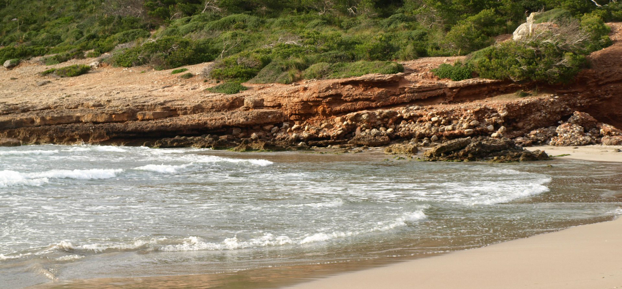
DETECTOR project (Horizon – MSCA-SE 1011235981) builds on the IN-TIME Project (In-situ instrument for Mars and Earth Dating Applications, G.A. 823934) which developed and validated a portable luminescence dating protoype through Alma Sistemi S.R.L and the Luminiscence Laboratory of the University of Sassari (Italy). This instrument offers new capabilities to deep in paleoclimate and archaeology studies that share methodologies like stratigraphic envent definition and absolute dating.
Climate change and human history are closely linked. Paleoclimate studies are essential for improving climate models, particularly for the 60 – 12 ka period, that is characterized by glacial and raplia millenial-scale climatic fluctuations. Investigating theses oscillations is crucial fpr assessing modern glonal warming and its impact on extreme weather events and sea level rise. Conversely, the millenial-scale climate shifts after 12 ka drove mass migrations and econonomic transformations, leaving significant archaeological evidence.
Against this background, DETECTOR project focuses in niche enrivonments like islands and desert regions because the former preserved strong evidence of climate change and human activity, particularly in the Mediterranean, while the latter are considered modern analogues of past glacial arid conditions. Key sites to be characterized in this project include Sardinia, Crete, Cyprus, Balearic Islands, Canary Islands, and deserts from California, Texas and Argentina. At each study site the project will develope field campaigns using updated portable instrument for in situ OSL absolute dating that will be cross-verified with laboratory analyses to assess the instrument’s functionality, operational reliability and performance. All of that for building the way for a novel scientific instrumentation product.
DETECTOR project units the expertise of partners fron Italy, Spain, Cyprus, Greece, USA and Argentina.
DETECTOR goals
Improving Paleo-Climate Studies
Improving Paleo-Climate Studies. The most suitable targets for paleo-climate studies are sedimentary successions from the late Quaternary, particularly the last 60,000 years. This project aims to analyze deposits that record high-frequency climatic fluctuations across key localities worldwide. By focusing on deposits formed under similar geological settings and within specific latitudinal ranges, we can establish direct correlations between comparable depositional environments and the climatic changes that shaped them.
To validate a portable luminescence instrument for rapid, non-destructive archaeological dating directly in the field
By analyzing artifacts and sediments from various historical periods, the device will be tested against established laboratory techniques, including radiocarbon (¹⁴C) and conventional luminescence dating, ensuring accuracy and reliability. DETECTOR aims to refine archaeological chronologies, optimize excavation strategies, and reduce reliance on expensive lab analyses. The ability to obtain immediate on-site age estimates will enhance decision-making and contribute to a deeper understanding of human history and cultural development.
Development of a Portable Sample Preparation Facility
To validate the miniaturized luminescence dating instrument for in-situ analysis, a fully operational portable Sample Preparation Facility (SPF) will be developed. This will enable luminescence geochronology directly in the field, eliminating the need to collect and transport samples to laboratories. Additionally, the existing IN-TIME prototype will be upgraded to integrate the SPF, ensuring seamless on-site sample processing.
Increase awareness of research community and professionals
DETECTOR aims to develop tools and informative materials to raise awareness among the research community and professionals active in geology and archaeology field. The objective is to disseminate knowledge about the available solution as prerequisite to address the market of scientific instrumentation.
To enhance cooperation and knowledge transfer between scientific and engineering fields and disciplines of different partners.
This provides researchers and professionals with the opportunity to go beyond the current state-of-the-art in geology, archaeology and instrumentation for geo-chronology, through a multidisciplinary and international approach based on the development and deployment in the field of a complete instrument that can contribute to Paleo-climate and Archaeology studies.
Promote network talent circulation, at European and worldwide level
By means of cross-sectoral mobility and multidisciplinary R&I activities, the project will build and enhance researchers and professionals’ network of contacts and, hence, possibly continue and improve their careers at high profile universities and well-established private enterprises, even after the end of their individual project within DETECTOR.
DETECTOR team
Alma Sistemi S.r.l., established in 2005 and headquartered in Rome, is an Italian SME specialised in advanced engineering and consultancy services for the aerospace, defence and security sectors. Its multidisciplinary portfolio covers business development, project and proposal management, market analysis, systems and software engineering, and Mechanical and Electrical. Ground Support Equipment (MGSE/EGSE), bridging research, technology development (RTD) projects and industrial programmes, and turning complex requirements into reliable, mission-ready solutions. With over 15 years of experience, Alma Sistemi has supported European institutions, research organisations and prime contractors in designing and delivering mission-critical systems. Core activities span Earth Observation, Navigation Applications, satellite checkout systems and payload test equipment, all developed in full compliance with ESA ECSS standards and the highest industry requirements. As an ISO 9001:2015 certified company, Alma Sistemi applies rigorous quality assurance and process management across engineering, documentation, and supplier qualification, delivering dependable systems that consistently meet mission-critical requirements in aerospace and defence programmes.
Quantum Innovation IKE, is a Greek SME established in 2022 that specializes in offering high-level consultancy services to industries and research centers. Our mission focuses on operating within high-value, high-tech sectors, where we assist clients in leveraging new technologies and innovative management practices to achieve their objectives. Our service offerings include business development, project management, market analysis, and system/software engineering, driving innovation across various fields. We possess expertise in software engineering areas such as artificial intelligence, computer vision, and large language models, alongside pioneering advancements in Quantum Artificial Intelligence technologies and the design and development of cutting-edge e-platforms. Additionally, our mechanical design services are tailored for the space industry, where we actively participate in Mechanisms Ground Support Equipment (MGSE) projects within the framework of ESA programs.
The University of Sassari (www.uniss.it) has been founded in 1562. Holding to its historical roots, the University has started its journey to become a reformed public University, within a more competitive and global international system, inspired by the principles of autonomy and responsibility; it is aware of the richness and complexity of academic traditions and the value of diverse identities. It promotes the training of young people and protects the right to education; and it places the student at the heart of its academic policies, thus promoting culture as a collective value. It champions the constitutional values set for HEI’s, the freedom to pursue one’s own study, research/teaching careers, ensuring all necessary conditions to make them effective.

Lithica SCCL (www.lithica.net) is a consulting firm specializing in geophysics and geology services for the oil&gas, mining, and water management sectors. Lithica multidisciplinary team offers integrated surface and sub-surface studies, consulting and managing services at all stages of the value chain including evaluation of business opportunities, exploration, business development and monitoring. The company nurtures an extensive network of collaborations with academia and industry partners with which we are actively participating in R&D projects to always provide our clients with the best and most innovative solutions, and training.
The established TUC lab of Materials for Cultural Heritage & Modern Building (MaCHMoB www.machmob.tuc.gr) shows activities on conservation materials, with low embodied energy, in the context of circular economy by designing: lime-based/ earth-based mortars with advanced energetic, mechanical, photocatalytic, antibacterial, optical properties; waste-based mortars and insulation materials; multi-function protective and consolidants based on nanotechnology for architectural surfaces conservation synthesized with a green approach and being compatible to the original structure; hydrophobic, self-sensing and self-cleaning SiO2-TiO2 based coatings for architectural surfaces; all those materials behave as hydrophobic, antifouling and self-cleaning agents. MaCHMoB organizes workshops for conservation interventions with simple tools and technology to increase awareness and social acceptance of natural, local, traditional materials – socio-environmental performance under the challenges of the climate change and the relative influence in the durability of the applied conservation products. MaCHMoB is contributing in a substantial way in the conservation and maintenance of emblematic Greek monuments (e.g. Acropolis, Athens, etc). MaCHMoB takes part in EU Horizon and national projects.
The Digital Humanities GeoInformatics – University of Cyprus. The Digital Humanities GeoInformatics Lab (https://www.ucy.ac.cy/dhla/) is supported by the «Sylvia Ioannou» Chair for Digital Humanities at the Department of History and Archaeology of the University of Cyprus. The Lab focuses on the application of cutting-edge technologies in Landscape Archaeology, Environmental Archaeology, Digital History, Monument Monitoring, and Cultural Heritage Risk Assessment and Modelling. Its activities span a wide range of domains, including Geographical Information Systems (GIS), geoinformatics (such as geophysical prospection, satellite remote sensing, aerial photography, and photogrammetry), as well as computational and statistical methods, machine learning, and artificial intelligence. The Lab’s research extends internationally, with particular emphasis on Cyprus, the Eastern Mediterranean, and the Balkans. In addition to providing hands-on training and access to advanced tools for students and professionals, the Lab conducts high-level research and geophysical surveys supported by state-of-the-art instrumentation and computing facilities. It has participated in numerous research projects funded by programs such as Horizon 2020, Erasmus+, the U.S. National Science Foundation, Interreg, and the Research and Innovation Foundation (IDEK). The Lab also supports a M.Sc. and a Ph.D. program on Digital Heritage and Landscape Archaeology (https://www.ucy.ac.cy/dhla/).
The University of the Balearic Islands (UIB) is a forward-thinking institution more than 40 years of history that has won a place amongst the top ranks of teaching and research universities. It is composed by Institutes and Research Groups, among them the Earth Sciences Research Group (ESRG) is a consolidated team with >15 years of activities and international collaboration with universities of Italy, UK, USA, Romania, Australia and New Zealand among others. The global scientific purpose of the research group is to contribute to the establishment of an evolutionary model about the morphogenesis of the carbonate coastlines in the western Mediterranean, in view of the recent evidence of a multi-causal speleogenesis in which, in addition to coastal karstification, would be implied a meteoric water supply and a recharge of hypogenic origin; all located chronologically and environmentally precisely thanks to the application of recent innovations in isotopic and radiometric dating. The ESRG deals with the improvement of knowledge of climate changes that have occurred since the Pliocene contributes to a better interpretation of current sea level trends related to climate change processes. The ESRG published in journals such as Science, Nature Geoscience or Nature.
National Centre for Scientific Research “Demokritos” is the largest research centre in Greece. It consists of 5 supplementary institutes, with the Institute of Nanoscience and Nanotechnology (INN) being the largest among them. INN is one of the leading research institutes in Greece with cutting edge activities very much aligned with most of the Horizon 2020 R&D priorities and Europe’s Key Enabling Technologies (KETs), such as Advanced Materials, Nanotechnology, Micro&Nanoelectronics, Nanobiotechnology, and Photonics. The R&D&I activities of INN are structured in five Programs aligned with the research priorities of the institute, including Cultural Heritage. The laboratory of RadioCarbon Dating and Other Technologies (RCDOT, https://inn.demokritos.gr/research_group/rcdot/), besides radiocarbon dating, specializes in basic research for age limit extension and application of new computational technologies to age calculation.
GEOMARS SRL is an spin-off company, established as a limited liability company in March 2024, provides geological studies, services, and surveys in both terrestrial and marine environmental fields. Additionally, it offers tools and services, including commercial ones, for the dating of recent sedimentary rocks using luminescence techniques. The company is involved in marine and terrestrial geological studies at various scales and across different fields. It offers environmental planning and waste management services for both marine and urban areas. The company also conducts feasibility studies and environmental research, manages and supervises projects, and carries out technical and economic feasibility assessments along with environmental impact studies. Furthermore, it is engaged in engineering and mechanical design activities, with a particular focus on research in extraterrestrial domains. The services provided include high-level geophysical investigations, as well as the acquisition, processing, and interpretation of geophysical data. The company is also involved in the engineering and mechanical development of instrumentation for absolute dating through luminescence.
Università “La Sapienza” (UNIRM1). The Stable Isotope Lab at Sapienza – Rome University (LISS) is a start-of-art facility for stable isotope characterization (C, N, O, H, Cl, S) of solids, liquids and gases. The laboratory belongs to a Department of Excellence 2023-2027 (MIUR); thus, LISS has been able to grow and be equipped with latest generation instruments for CSIA (hydrogen, carbon and chlorine), triple oxygen and clumped isotope analyses. LISS is devoted to scientific projects employing advanced isotopic analysis (such as multiple element compound-specific, triple oxygen and clumped analysis) in different geological applications, with particular attention to climate studies, sustainable uses of geo-resources, and environmental protection. LISS’ most innovative lines of research are: (1) Triple Oxygen in Silicates – by laser ablation systems we measure triple oxygen isotopes in silicates, providing insights on isotopic fractionation processes and the origin of oxygen in silicate rocks; (2) tracking gases and pollutants such hydrocarbons and chlorinated solvents utilizing Compound Specific Isotope Analysis (CSIA) to monitor the dispersion and degradation of these substances in the environment; (3) CSIA analysis for biological, chemical and physical remediation methods characterization: laboratory, pilot tests to full remediations.
The University of Texas at Austin (UT Austin www.utexas.edu), founded in 1883, is a public research university and the flagship institution of the University of Texas System. It offers diverse academic programs across 19 colleges and schools, with over 51,000 students enrolled. A leading research centre, UT Austin invests over $1 billion annually in research and hosts seven museums and seventeen libraries, including the Lyndon B. Johnson Presidential Library. It also operates key research facilities, such as the McDonald Observatory. Committed to education and innovation, UT Austin places students at the core of its academic mission, ensuring freedom in study, research, and teaching, while promoting knowledge as a collective value.

Founded in 1812, the Argentine Museum of Natural Sciences in Buenos Aires (Museo Ciencias Naturales – Museo Argentino de Ciencias Naturales) is the oldest museum in Argentina and it is part of the National Research Council of Argentina. The museum is a national institution specialized in research, conservation, education, and the promotion of natural sciences. It preserves an extensive collection of fossils, minerals, and native flora and fauna. Its area of research spans from Ecology, Botanic, Geology, paleontology, and Zoology.